Referee Bias Patterns Emerge as Key Factor in Domestic League Betting Calculations
Riley Krüger · Aug 29, 2026
Referee Bias Patterns Emerge as Key Factor in Domestic League Betting Calculations
Referee bias patterns have drawn increasing attention from analysts who track domestic league outcomes and integrate those trends into betting models across multiple competitions. Observers note consistent variations in card issuance, penalty awards, and stoppage time decisions that align with specific referee profiles, home team advantages, and league contexts. Data from recent seasons shows these elements influence point spreads, goal totals, and player prop markets in ways that bookmakers adjust through refined algorithms.
Documented Patterns Across European Domestic Leagues
Studies compiled by sports analytics groups reveal that certain referees maintain measurable tendencies toward stricter foul counts in away fixtures, while others extend added time when trailing sides push for equalizers. These patterns appear across top divisions where fixture congestion and travel distances create distinct environments. Analysts cross-reference historical match logs with referee assignments released weeks in advance, allowing betting syndicates to factor expected decision distributions into pre-match calculations. In one notable case, data from the 2025-2026 campaign indicated that referees averaging over 5.2 yellow cards per game produced elevated over-card totals in 68 percent of their domestic assignments.
Integration into Modern Betting Models
Betting operators now embed referee-specific variables directly into their pricing engines, adjusting implied probabilities for corners, bookings, and total goals based on individual histories. This shift gained momentum as automated tracking systems supplied granular metrics on decision timing and spatial tendencies. Research published through academic channels demonstrates that models ignoring referee bias underperform by margins ranging from 4 to 7 percent on season-long simulations in several European leagues. Those who build custom calculators incorporate variables such as average stoppage time per 45 minutes, home team penalty conversion rates under specific officials, and disciplinary patterns during evening kickoffs.

Regional Variations and League-Specific Trends
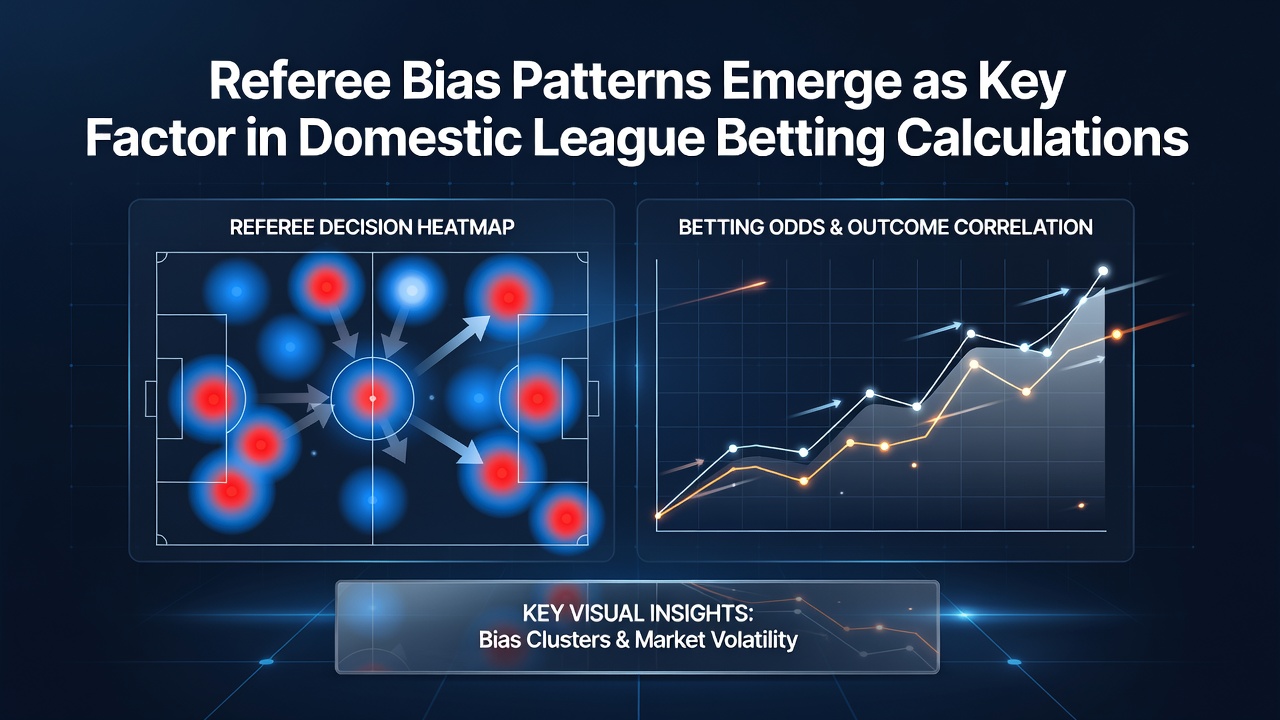
Domestic leagues outside Europe display parallel developments. Australian A-League records indicate referees in coastal venues issue fewer cards during high-temperature matches, a factor now incorporated into player prop projections by regional operators. In South American competitions, observers have tracked extended stoppage periods in derbies that correlate with higher draw frequencies, prompting adjustments in live betting interfaces. North American soccer leagues report similar refinements, with data providers supplying referee heat maps that highlight zones where fouls cluster most frequently. These regional datasets feed into broader frameworks used by professional syndicates operating across multiple time zones.
Impact on In-Play and Pre-Match Markets
Live betting platforms adjust odds dynamically once referee assignments become public, with early shifts observed in card and corner lines. Pre-match markets reflect accumulated bias data through modified totals, particularly when officials with elevated penalty award rates handle matches involving teams that draw frequent set-piece decisions. August 2026 fixtures already show early signs of these recalibrations, as operators release updated pricing sheets incorporating the previous season's full referee dataset. Bettors monitoring public odds movements have noted faster line adjustments in leagues where referee schedules are confirmed further in advance.
Future Data Collection and Model Refinement
Technology providers continue expanding sensor coverage and video review integration, supplying richer inputs for bias detection algorithms. Government statistical agencies in several countries now release anonymized match data that includes referee identifiers, enabling independent verification of earlier findings. Industry reports from trade associations highlight ongoing investment in machine learning systems that isolate referee effects from team style and tactical variables. These developments support more granular calculations across domestic schedules while maintaining compliance with evolving regulatory frameworks outside the United Kingdom.
Conclusion
Referee bias patterns have become a measurable component within domestic league betting calculations as data availability and analytical techniques advance. Leagues, operators, and independent researchers continue documenting decision trends that translate into adjusted market prices across multiple bet types. The integration of these factors reflects broader movement toward evidence-based pricing that accounts for every controllable variable in match outcomes.