Betfred to Close 73 More UK High Street Stores Citing Tax and Cost Pressures
Elena Wolf · Nov 21, 2026

Betfred to Close 73 More UK High Street Stores Citing Tax and Cost Pressures
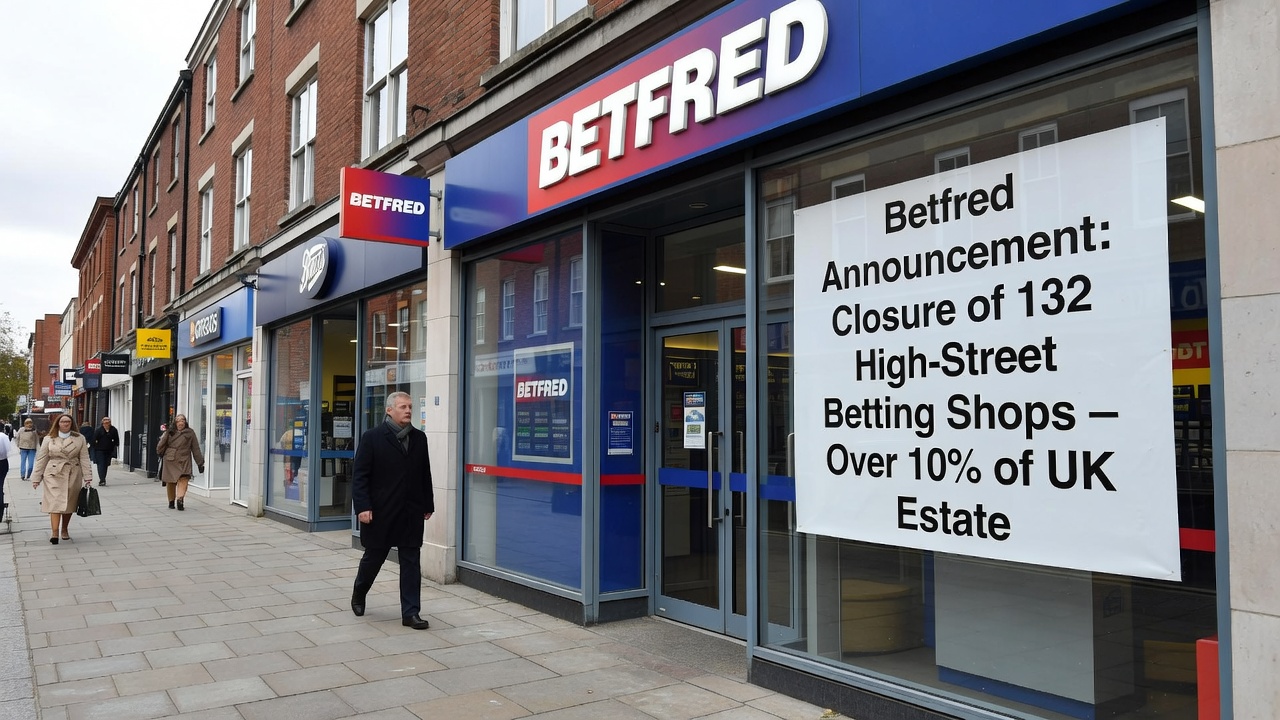
Betfred has confirmed plans to shut 73 additional high street betting shops across the UK, a move that will eliminate around 360 positions, on top of the 132 stores the operator has already closed in recent years. The announcement highlights successive increases in gambling sector taxation, including the Budget decision to raise the levy on high-stakes slot machines from 20 percent to 25 percent starting in April 2027, together with elevated employment costs. Company executives described the cumulative effect of these policy changes as leaving no viable alternative to further contraction of the retail network.
Details of the Latest Closures
The new round of reductions builds directly on earlier retrenchment and brings the total number of outlets affected since the initial wave to more than two hundred. Each closure round has been tied explicitly to government fiscal measures rather than to trading performance alone. Staff reductions are expected to occur through a combination of natural attrition and redundancy processes, with the company indicating that affected employees will receive support packages consistent with statutory requirements and internal policies.
Policy Changes Driving the Decision
Successive Budgets have layered additional duties onto both land-based and remote gambling operators, and Betfred’s leadership pointed to the combined weight of these adjustments as the decisive factor. The levy increase scheduled for high-stakes slots machines, which take effect in April 2027, forms the most recent increment in a sequence that has raised the overall tax burden on the retail estate. Higher employer National Insurance contributions and other employment-related costs have compounded the pressure, prompting the firm to accelerate its shift toward a smaller physical footprint while maintaining its online presence.
Observers tracking the sector note that the timing of the announcement coincides with ongoing fiscal forecasts that project further revenue measures in subsequent years. Although the operator has not released a precise timetable for the 73 closures, the process is understood to begin once internal consultations conclude, potentially spanning several months into 2027.
Industry-Wide Patterns
Multiple other operators have cited similar tax and cost dynamics when announcing their own estate reductions, illustrating a consistent response across the high-street gambling market. Long-term migration of customer activity toward online platforms has already reduced footfall in many locations, and the additional fiscal load has removed the margin previously available to sustain marginal stores. Data compiled by industry bodies show that the proportion of total gambling revenue generated through physical premises has declined steadily for more than a decade, accelerating the rationalisation already under way before the latest levy adjustment.
Those monitoring employment trends in the sector report that job losses from store closures have been partially offset by recruitment in digital operations, yet the net effect remains negative for roles that historically required face-to-face customer interaction. Regional variations exist, with higher concentrations of affected outlets in urban centres where multiple operators maintain overlapping networks.
Employee and Community Implications
Workforce representatives have begun discussions with Betfred management to clarify redundancy terms and explore redeployment opportunities within the remaining estate or the company’s growing online division. Local authorities in areas facing multiple closures have expressed concern over the loss of business rates revenue and the secondary impact on nearby retail and hospitality businesses that rely on passing trade from betting-shop customers. Community groups have also noted the potential reduction in supervised environments where some individuals previously accessed gambling under regulatory controls.
The company has stated that remaining stores will continue to operate under existing standards, including age-verification checks and responsible-gambling messaging, while investment in digital platforms absorbs a larger share of capital expenditure going forward.
Conclusion
Betfred’s decision to close another 73 stores reflects the intersection of targeted tax increases, rising employment costs, and structural migration toward online channels that has characterised the UK gambling sector for several years. The 360 associated job losses add to the cumulative total from prior rounds and underscore the scale of adjustment still facing land-based operators as the April 2027 levy change approaches. Further announcements from other firms are anticipated as the same cost pressures continue to influence strategic planning across the industry.